

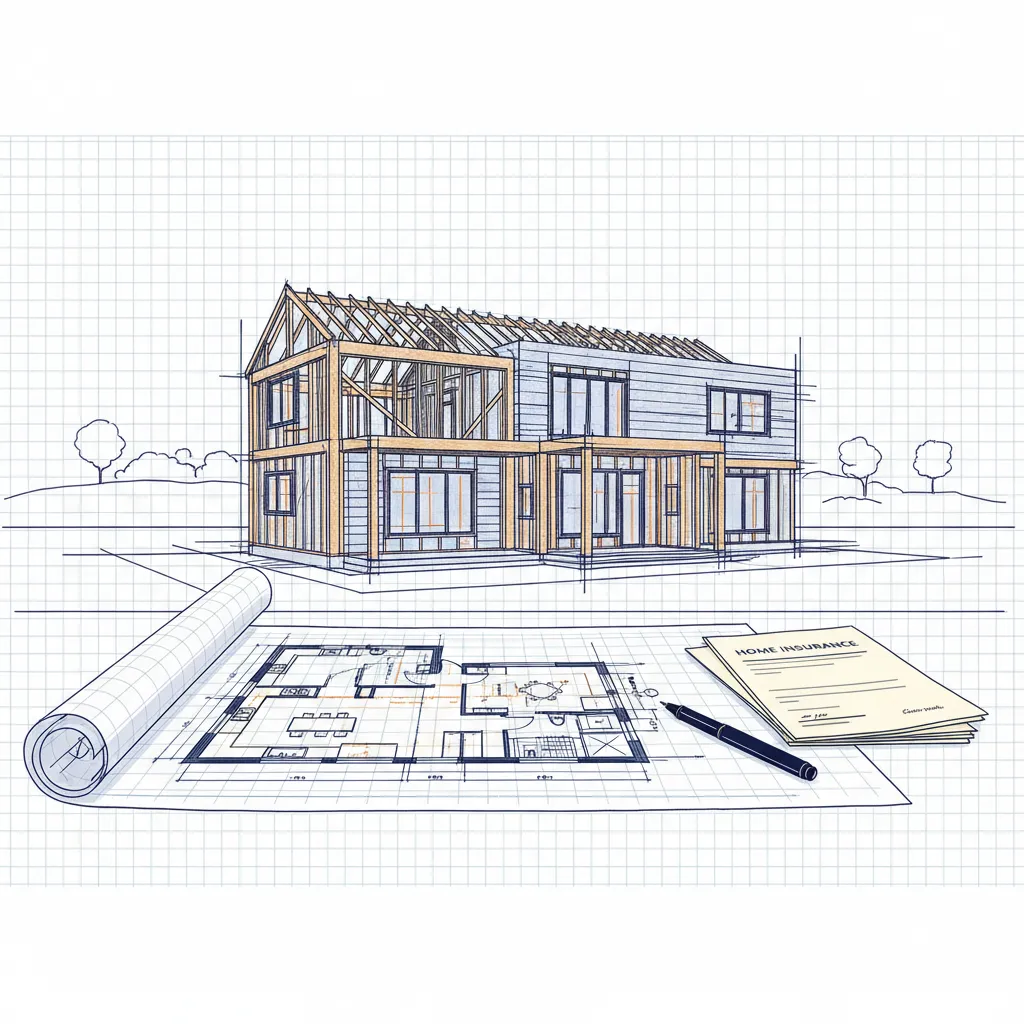
Architecting Your Financial Foundation: From Groundbreaking to Framing
Building a custom home translates a vision into a physical asset. That asset, however, remains vulnerable until its financial defenses are engineered with the same precision as its structural supports. A fragmented insurance approach is a blueprint for failure, creating gaps in the moat around your life’s work. Strategic certainty demands a cohesive, end-to-end protection strategy that begins before the first shovel breaks ground.
The Builder’s Risk Policy: Your Project’s First Line of Defense
A Builder’s Risk Policy, a specialized form of property insurance, shields the financial capital invested in a structure during the course of construction. This instrument is not an option; it is the foundational safeguard for your project. It protects the physical structure and on-site materials against specific events, known as named perils. These typically include fire, wind, vandalism, and theft. We structure these policies to defend your deployed capital, so you can neutralize the financial shock of material theft or a weather-related setback, which can derail project timelines and budgets by 5-10%.
Defining the Scope: What ‘Course of Construction’ Actually Protects
The ‘Course of Construction’ is the defined timeline from groundbreaking to project completion, and it dictates the active period of your Builder’s Risk policy. This coverage is not static; it scales as the project’s value increases. It protects the raw materials delivered to the site, equipment stored on the premises, and the emerging structure itself. Coverage can even extend to materials in transit, so your investment is protected from the supplier’s warehouse to the moment it is installed.
Phase 2: Active Construction. The policy actively protects the rising structure and materials from theft, fire, and vandalism.
Phase 3: Finalization & Handover. We audit project completion and execute a seamless policy transition timed to the exact day you receive the Certificate of Occupancy.
Fortifying the Structure: Navigating the Transition to Occupancy
The transition from a construction site to a home is the moment of greatest risk. This is where unadvised clients discover devastating coverage gaps. The handover from a builder’s policy to a homeowner’s policy must be a precise, zero-day event. Any misalignment leaves your multi-million dollar asset completely exposed.
The Vacancy Clause: A Critical Risk on Your Project Horizon
The Vacancy Clause, a standard exclusion in most homeowners policies, eliminates or severely restricts coverage if a property remains unoccupied for a defined period, typically 30 to 60 days. Activating a standard homeowners policy on a home you have not yet moved into is a critical error. If a loss occurs during this vacancy period, your claim will be denied. We manage this risk proactively, so you avoid having a catastrophic loss denied on a contractual technicality.
The Handover Protocol: Transitioning from Builder’s Risk to Homeowners Coverage
The Certificate of Occupancy (CO), a legal document issued by your local building authority, confirms the home is habitable and serves as the official trigger for transitioning your insurance. This is the handover protocol. The moment the CO is issued, the Builder’s Risk policy is no longer appropriate, and a permanent homeowners policy must be legally bound and activated. This transition must be seamless, with no gap and no overlap.
| Policy Feature | Builder’s Risk Policy | Homeowners (HO-5) Policy | Strategic Note |
|---|---|---|---|
| Primary Purpose | Protects a structure during construction | Protects a finished, occupied dwelling | The transition point is non-negotiable and must be exact. |
| Key Coverage | Theft of materials, on-site liability, fire | Personal property, liability, structural damage | An HO-5 offers the broadest protection for the completed asset. |
| Activation Trigger | Groundbreaking or material delivery | Certificate of Occupancy | Activating the HO-5 early risks voiding coverage via the Vacancy Clause. |
Blueprinting Your Final Fortress: Calculating True Replacement Cost
Once construction is complete, the final task is to secure the correct amount of permanent coverage. The most common and costly error is confusing your home’s market value with its replacement cost. This mistake is the leading cause of underinsurance, forcing owners to cover a 20-30% funding gap out-of-pocket after a total loss.
Beyond Market Value: The Mechanics of Final Replacement Cost
Market value is what a buyer will pay for your home and land. Replacement Cost is the total capital required to rebuild the structure from the ground up after a catastrophic loss. This figure includes demolition, debris removal, architectural fees, permits, and current construction costs for labor and materials. A Replacement Cost Estimator (RCE), a detailed valuation tool, calculates this true figure. We use proprietary RCE tools, so your coverage limit reflects the real-world cost to restore your asset to its original state, not a theoretical market price.
Stress-Testing Your Coverage for High-Value Finishes and Features
A custom home is defined by its unique details: imported stone countertops, custom millwork, integrated smart home technology, and commercial-grade appliances. A standard policy imposes sub-limits that will not cover the full cost of these features. An endorsement, a specific addition to your base policy, expands coverage for these unique architectural elements. We itemize and schedule these high-value finishes, so your fortress is rebuilt to its original specifications, not a lesser, builder-grade standard.
Integrating Your Asset: From a Policy to a Portfolio Strategy
You did not build a house; you created a significant asset that must be integrated into your overall financial fortress. An insurance policy is not an expense. It is a strategic tool that defends your entire balance sheet. Yet most professionals remain only 40% protected because their policies are fragmented and misaligned.
From a Fragmented Policy to a Cohesive Financial Fortress
Our objective is the 100% Completion Goal, where your home, auto, and liability coverages work as a single, cohesive shield. This architecture requires integrating all underlying limits and adding a final defensive layer. An Umbrella Policy, a secondary layer of liability protection, sits atop your home and auto policies to shield your entire net worth from litigation. We engineer this cohesion, so you eliminate the gaps that threaten your equity and future earnings.
Partnering with Your Build Team for End-to-End Protection
We operate as a strategic partner, a financial architect on your build team alongside your contractor and legal counsel. Our involvement begins at the blueprint stage, not weeks before move-in. This proactive project oversight eliminates the handoff errors and coverage gaps that create financial exposure. This integrated approach moves you from a paper legacy to a durable one, secured by a meticulously engineered protection strategy. That is Strategic Certainty.