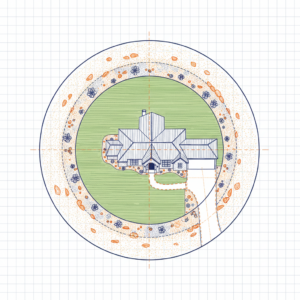

An estate plan is the blueprint for your legacy. A trust is the structural frame. Yet, many successful individuals build this sophisticated framework only to leave its foundation—the insurance protecting the physical assets within it—exposed to catastrophic failure. Transferring your home’s title into a trust without re-architecting your insurance creates a critical vulnerability. The policy you have relied upon may become a worthless piece of paper at the moment of a major loss. This guide provides the strategic framework to align your home insurance with your trust, transforming a potential liability into a fortress for your assets.
The Foundational Disconnect: Why Standard Insurance Fails Your Trust
Placing a home into a trust severs the direct ownership link between you and the property. Standard insurance policies are contracts built on a specific legal principle that this action disrupts. This disconnect between legal ownership (the trust) and the insured party (you, the individual) is not a minor detail; it is a structural flaw that can invalidate your entire policy.
Defining and Proving Insurable Interest for a Trust
Insurable interest, a core insurance principle, requires the policyholder to suffer a direct financial loss if the insured property is damaged or destroyed. When you personally own your home, your insurable interest is clear. However, once you transfer the title to a revocable living trust, the trust becomes the legal owner. You, as an individual, no longer have a direct, titled ownership stake.
An insurance carrier can argue that the individual named on the policy no longer has insurable interest, giving them grounds to deny a claim and void the policy. To prevent this, you must prove the trust’s insurable interest to the carrier. This is typically accomplished with a Certificate of Trust, a legal summary document, which verifies the trust’s existence and identifies the trustees empowered to manage its assets. Without this alignment, you are paying for an illusion of protection.
The Risk of a ‘Paper Fortress’: When Your Policy is Just an Illusion
An incorrectly titled policy is a paper fortress. It looks sound from the outside but offers no real defense against financial threats. If a fire, major storm, or significant liability event occurs, the insurance carrier will conduct a thorough review of the property’s title during the claims process. When they discover the discrepancy—the trust owns the home, but an individual holds the policy—the claim is often denied.
1. Asset Transfer: You title your home into a trust as part of a sound estate plan.
2. Policy Mismatch: The home insurance policy remains in your individual name, creating a legal ownership disconnect.
3. Loss Event Occurs: A significant event like a fire causes millions in damages.
4. Claim Investigation: The carrier verifies ownership and discovers the title is held by the trust, not the named individual.
5. Coverage Voided: The carrier denies the claim based on a lack of insurable interest, leaving the trust to fund all repairs.
This single oversight exposes your entire estate to the full financial impact of the loss. The moat you designed to protect your castle is instantly drained, leaving your life’s work vulnerable. This is not a risk; it is an unacceptable certainty without proactive intervention.
Architecting the Correct Insurance Structure for Your Trust
To secure your assets, the insurance policy must be re-architected to reflect the trust’s legal ownership. This requires precise policy language and a clear understanding of the roles of trustees and beneficiaries. Simply adding the trust’s name to a policy is insufficient; the structure of the policy itself must change.
Named Insured vs. Additional Insured: A Critical Distinction for Trustees and Beneficiaries
The policy’s structure dictates who has rights and control. The terms ‘Named Insured’ and ‘Additional Insured’ carry significant legal weight and must be assigned correctly.
The Named Insured is the primary entity covered by the policy. It has the authority to make changes, cancel the policy, and receive claim payments. For a property in a trust, the trust itself must be listed as the primary Named Insured.
An Additional Insured is a person or entity other than the Named Insured who is granted some degree of protection under the policy. In this context, the trustees and resident beneficiaries are typically listed as Additional Insureds—so you can grant them liability protection without giving them control over the policy itself.
| Policy Role | Entity | Strategic Function & Rights |
|---|---|---|
| Named Insured | The Trust Itself (e.g., “The John Smith Revocable Trust”) | Owns the policy. Receives claim payments for property damage. Has ultimate authority to modify or cancel coverage. |
| Additional Insured | The Trustee(s) (e.g., “John Smith, Trustee”) | Receives personal liability protection while acting on behalf of the trust. Does not own the policy or control claim payments for the dwelling. |
| Additional Insured | Resident Family Members / Beneficiaries | Receives personal liability and personal property protection while residing in the home. Ensures their interests are covered without disrupting the trust’s ownership. |
Shielding the Trustee: Fortifying Against Personal Liability
A trustee has a fiduciary duty, a legal obligation, to act in the best interests of the trust and its beneficiaries. This duty includes prudently managing and protecting the trust’s assets, including real estate. If a guest is injured on the property and sues, they will likely sue both the trust and the trustee personally.
Properly structuring the insurance policy shields the trustee from personal financial exposure. By listing the trustee as an ‘Additional Insured,’ the policy’s personal liability coverage extends to defend them against lawsuits arising from their management of the property. This is a critical risk mitigation strategy that protects the personal assets of the individual tasked with executing your legacy’s directives. It insulates them from litigation—so they can manage the trust with confidence and strategic certainty.
Integrating Your Insurance Blueprint with Your Estate Plan
Achieving the 100% Completion Goal for your asset protection requires more than just correct insurance documents. It demands a cohesive strategy, where your insurance acts as an integrated component of your overall estate plan. This level of cohesion is only possible through collaboration between your entire advisory team.
A Coordinated Defense: Aligning with Your Legal and Financial Team
Your estate planning attorney architects the trust. Your financial advisor manages the assets within it. Your risk advisor must build the fortress around it. These functions cannot operate in silos. A disconnected strategy is an invitation for risk.
We mandate a coordinated approach. We work directly with your estate planning attorney and financial advisor to ensure the risk management strategy aligns perfectly with the legal structure and financial goals of the trust. This collaborative process identifies potential conflicts or gaps before they become liabilities. It synchronizes every component of your plan—so you can operate from a position of unified strength.
Translating the Trust Document into an Actionable Insurance Plan
A trust document is a complex legal instrument. It outlines the powers of the trustee, the rights of beneficiaries, and specific requirements for managing property. We analyze these documents to extract the critical information needed to build a compliant and effective insurance plan.
We review clauses related to property management, the trustee’s authority to purchase insurance, and any stipulations regarding coverage levels. This translation from legal language to an actionable insurance structure is fundamental to creating a resilient defense. We ensure the policy not only protects the asset but also empowers the trustee to act in full compliance with your stated intentions, eliminating ambiguity and future legal challenges.
Moving from Blueprint to Fortress: Securing Your Legacy
Your success was built through strategic action, not passive hope. Protecting it demands the same rigor. It is time to move beyond generic coverage and construct an integrated risk management fortress that defends your legacy with precision and certainty.
Building a Resilient, Cohesive Risk Management Structure
A resilient structure is more than just a policy; it’s a long-term strategy. It starts with a holistic risk assessment that views your trust, properties, and personal liabilities as a single, interconnected portfolio. From there, we design an integrated protection plan where each policy works in concert with the others, eliminating the gaps that standard approaches create.
This proactive management ensures your protection framework adapts as your assets evolve and as the legal landscape shifts. We build for today’s realities and tomorrow’s horizons, ensuring your financial security is never compromised by a structural oversight. This is how you achieve Strategic Certainty.
Schedule Your Strategic Legacy Protection Review
Your asset structure is unique. Your risk protection must be as well. A generic policy is a foundational weakness in an otherwise strong financial house. We invite you to schedule a confidential Strategic Legacy Protection Review.
In this session, we will analyze your current trust and insurance documents to identify critical gaps and structural misalignments. We will provide a clear, actionable risk blueprint designed to fortify your assets and provide absolute clarity. This is not a sales call; it is a top-level strategy session to protect the success you have worked tirelessly to build. Let’s ensure your moat is deep, fortified, and ready to defend your castle.