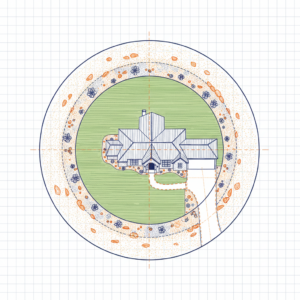

Beyond the Bundle: Architecting Your Liability Fortress
Successful individuals build wealth through disciplined strategy, yet often protect it with fragmented, commodity-grade tactics. A standard auto and home insurance bundle is not a protection strategy; it is a compliance checkbox. True asset protection demands architectural thinking. It requires constructing a liability fortress where each component is engineered to support the next, creating a cohesive defense against financial threats that can dismantle decades of work in a matter of months.
The Auto Policy as Your Foundational Blueprint
Your auto insurance policy is the foundational blueprint for your entire liability structure. It establishes the first line of defense against legal and financial assault. Bodily Injury and Property Damage Liability, the two core components, are designed to cover costs you are legally obligated to pay after an at-fault accident. Bodily Injury Liability addresses medical expenses, lost wages, and legal fees for injured parties. Property Damage Liability covers the repair or replacement of another person’s vehicle or property. Most standard policies provide insufficient limits, creating a fragile foundation. We calibrate these limits to the maximum available — so you can build a stable base capable of supporting a multi-million dollar defensive structure.
The Umbrella Policy: Your Multi-Million Dollar Shield
A Personal Umbrella Policy, a dedicated excess liability instrument, functions as your fortress’s high wall and reinforced keep. It provides $1 million to $10 million, or more, in additional liability coverage that activates only after the limits of your foundational auto or home policy are exhausted. This instrument is not a luxury; it is a mathematical necessity for anyone with a net worth exceeding their auto policy’s liability cap. A single catastrophic event—a multi-car accident, an injury on your property—can generate a judgment that bypasses standard coverage limits by millions. The umbrella policy stands as the strategic reserve, absorbing the catastrophic financial shock and preserving your core assets from seizure and liquidation.
Deconstructing the Financial Architecture of a Combined Policy
An effective liability fortress is not merely stacked; it is integrated. Understanding the mechanics of how your auto and umbrella policies interlock is critical to eliminating vulnerabilities. This requires a precise calibration of limits, a clear understanding of risk retention, and a systematic process for identifying gaps left by standalone products.
Calibrating Underlying Limits: The Entry Point to the Fortress
Underlying Limits, the liability maximums on your foundational auto and home policies, serve as the price of admission for an umbrella policy. Insurers will not extend multi-million dollar coverage without proof that a robust primary defense is already in place. They mandate specific minimums, typically $250,000/$500,000 for Bodily Injury Liability on an auto policy. Viewing these minimums as a target is a strategic error. The goal is to maximize these foundational limits. This action reduces the frequency of claims reaching your umbrella policy — so you can maintain a favorable risk profile and secure superior terms on your high-level protection.
Understanding Self-Insured Retention (SIR): Your Strategic Position
Self-Insured Retention (SIR), a provision in many umbrella policies, represents a calculated amount of risk you agree to absorb for specific types of claims. Unlike a standard deductible, an SIR typically applies only when the umbrella policy covers a loss not addressed by your underlying policies. For example, if you are sued for libel or slander—a risk often covered by an umbrella but not a home or auto policy—you would be responsible for paying the SIR amount (e.g., $1,000 to $5,000) before the umbrella coverage activates. This is your strategic co-investment in your own defense, allowing the policy to focus on catastrophic financial threats rather than minor ones.
Identifying Critical Coverage Gaps in Standalone Policies
Fragmented, standalone policies create predictable and dangerous gaps. An auto policy is built for vehicle-related incidents. A homeowners policy is built for premises liability. A cohesive umbrella strategy seals the gaps between them and adds coverage for entirely new threat vectors. These include personal injury claims like libel, slander, defamation, and false arrest—risks that are magnified for professionals and community leaders. An integrated approach maps your total exposure, then deploys a purpose-built shield to cover the entire landscape, not just isolated parts of it.
Executing the Cost-Benefit Analysis: A Strategic ROI Calculation
Evaluating an integrated liability strategy requires shifting from an expense mindset to a return-on-investment calculation. The monthly cost of coverage is a known, fixed input. The potential loss it prevents is catastrophic and variable. The ROI is therefore asymmetric, offering a multi-million dollar asset preservation benefit for a nominal annual investment. It is one of the highest-yield defensive investments available to a successful individual.
Quantifying the Risk: The True Cost of a ‘Paper Legacy’
A legacy defined only by assets on a balance sheet is a paper legacy—vulnerable and brittle. A single liability event can trigger a cascade of wealth destruction: court-ordered asset seizure, forced liquidation of real estate or investment portfolios at unfavorable prices, and future wage garnishment. Legal defense costs alone can exceed six figures, even in a victorious case. Without an integrated shield, these costs are paid directly from your net worth. The true risk is not the probability of an event, but the 100% certainty of financial ruin if a catastrophic event occurs without the proper architecture in place.
| Liability Component | Fragmented Approach (Common) | Integrated Fortress (Strategic) |
|---|---|---|
| Auto Bodily Injury Liability | $100k / $300k | $500k / $500k (or highest available) |
| Homeowners Personal Liability | $300,000 | $1,000,000 |
| Personal Umbrella Policy | None | $2 Million – $5 Million+ |
| Outcome | Exposed Net Worth | Strategic Certainty |
Mapping the Value: The Asymmetric Upside of Layered Coverage
Strategic value is measured by the delta between cost and benefit. A $2 million umbrella policy might cost between $700 and $1,200 annually. This investment secures $2 million in capital, shielding your entire net worth from a catastrophic judgment. The financial leverage is immense. This structure transforms your personal balance sheet from a vulnerable target into a resilient fortress. It allows you to continue your wealth-building strategy with the certainty that a single unpredictable event will not force a total financial reset.
Moving from a Fragmented Approach to a Cohesive Strategy
The final step is a deliberate shift in mindset. You must move from buying insurance as a commodity to implementing it as a core component of your financial strategy, engineered with the same rigor as your investment portfolio or estate plan.
Dismantling the ‘Good Enough’ Mindset of Siloed Policies
The ‘good enough’ approach, often driven by the pursuit of the lowest possible monthly payment, is the single greatest threat to a high-earner’s financial security. It treats policies as isolated products, ignoring the dangerous gaps that form between them. An auto policy from one carrier and a homeowners policy from another have no engineered cohesion. They were not designed to work together, leaving you to personally cover any liability that falls in the space between. This check-the-box mentality creates a dry moat around your castle—an illusion of security that will fail under the first real attack.
Building Your Integrated Financial Fortress
Constructing your liability fortress is an act of financial engineering. We begin with a comprehensive review of your balance sheet, lifestyle, and unique risk exposures. We then architect a bespoke protection plan, calibrating your foundational auto and home policies to their maximum defensive capacity. Finally, we layer on a correctly sized umbrella policy, integrating all components into a single, cohesive shield. This is the path from having mere coverage to achieving Strategic Certainty. It is the framework that ensures the legacy you build is the legacy that endures.